Building a Digital Resource Hub With a Trauma-Informed Lens
Pivot Design Group partnered with the Canadian Centre for IPV-BI to build a comprehensive brand identity and website, creating a central hub for IPV-BI resources, support, and connection.


- Client
- The Canadian Centre for Intimate Partner Violence and Brain Injury (IPV-BI)
- Sector
- Gov't & NFP, Health
- Focus
- Website Design, Brand Design
Challenge
Currently, Intimate Partner Violence and Brain Injury (IPV-BI) resources for frontline workers, researchers, and survivors are fragmented across multiple sources, creating inefficiencies and barriers to accessing critical information and support. Additionally, because the field is relatively new, there aren't many dedicated professionals working in this space yet— so community connection and knowledge-sharing opportunities are limited.
The Canadian Centre for IPV-BI partnered with Pivot to develop a comprehensive brand identity and website, positioning the organization as Canada’s national hub for IPV-BI resources, knowledge-sharing, and community connection. The desired outcomes were clear: increase resource accessibility and usage, establish strategic partnerships, and foster community engagement and connection that extends beyond digital spaces to physical spaces. The goal was to create an accessible digital resource hub for survivors and support professionals dealing with IPV-BI.
Process
The project began with a compass session to align on project goals and organization goals, help understand the IPV-BI landscape, and identify target users.
Before moving forward, we conducted extensive research on trauma-informed design principles to ensure we weren't inadvertently re-traumatizing survivors, causing cognitive overload, or making it difficult for them to absorb information or navigate the site. These design principles informed all subsequent UX and visual design decisions.
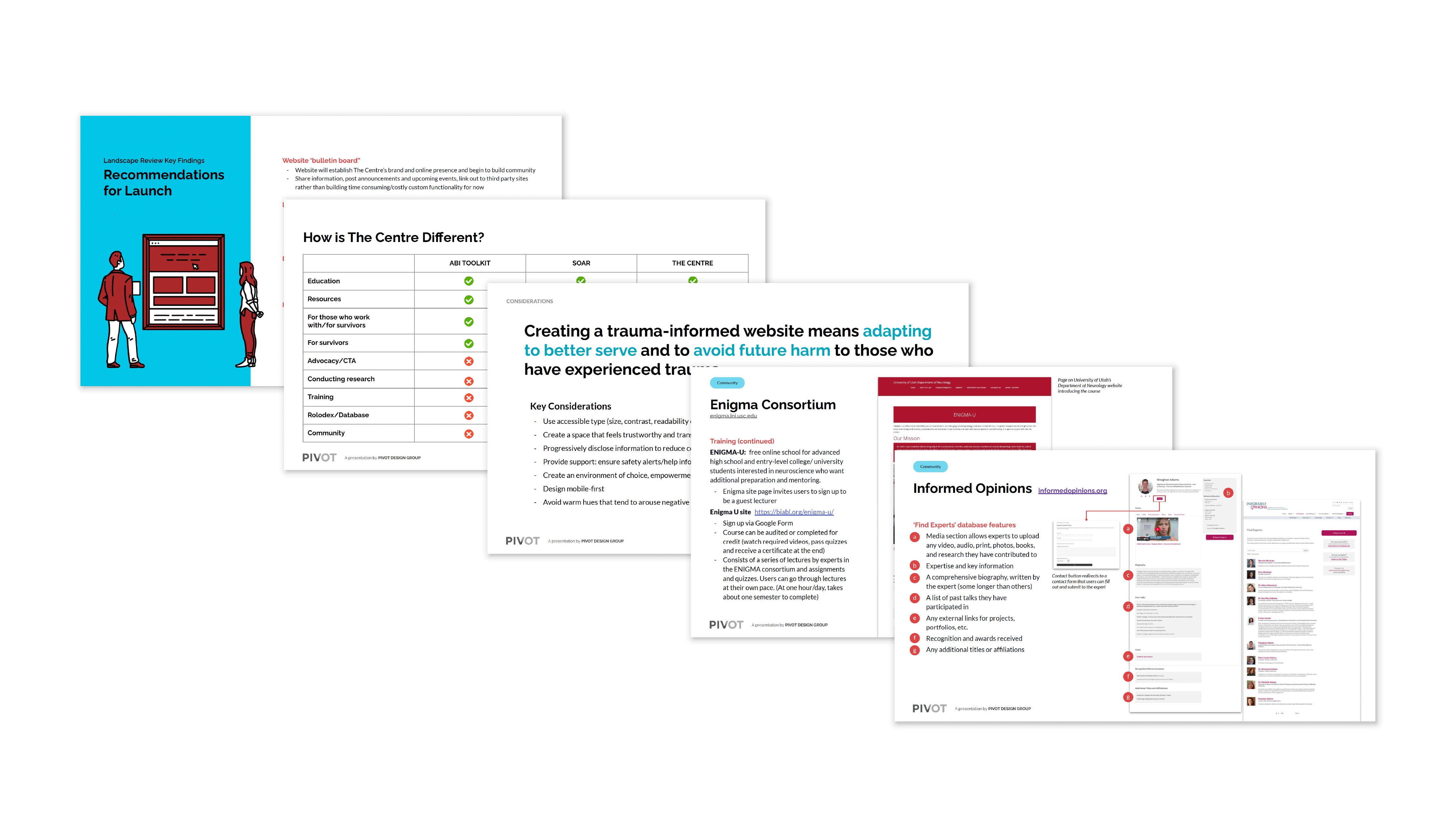
A comprehensive landscape review of existing organizations, initiatives, and digital platforms helped us better understand the current IPV-BI ecosystem, including the tools, resources, and support models already available to survivors and frontline workers. By evaluating how these platforms approached accessibility, information architecture, and community support, we identified opportunities to improve usability, trust, and connection within the space.
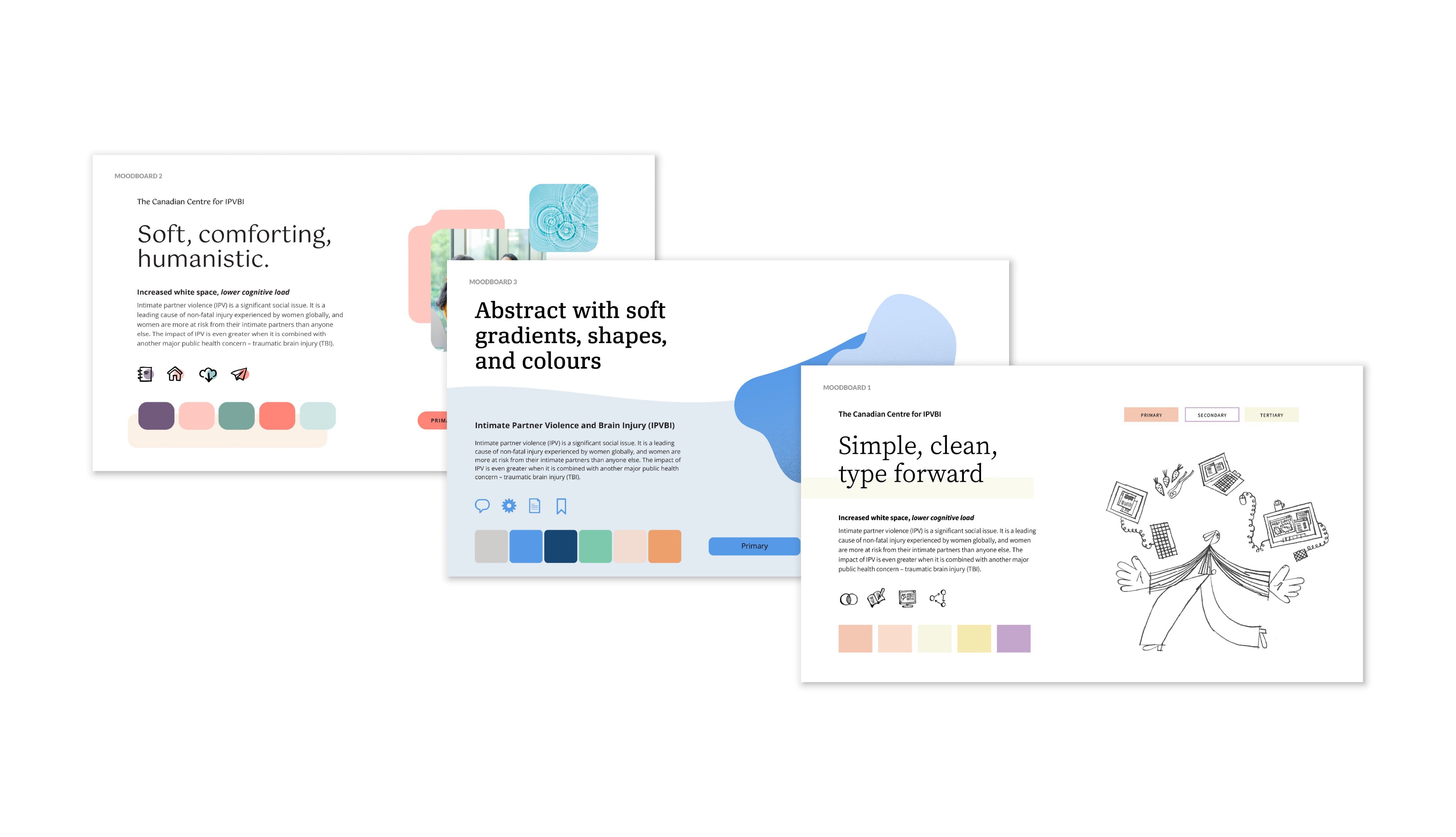
Moodboard explorations helped to establish a visual identity centred around approachability, comfort, and reliability.
Solution
The logo visualizes The Centre as a beacon, spreading resources and support into the community. A pastel palette creates a sense of calm and approachability, centred around the IPV movement’s universally recognized colour, purple. Soft curves and rounded edges help to create a sense of safety, while sans accessible typographic pairings add a sense of trust and reliability.

A series of custom continuous-line illustrations bring warmth, humanity, and connection to the brand. Illustrations were intentionally chosen over photography to avoid depicting sensitive experiences in a literal way, which could be distressing or re-traumatizing for survivors. These illustrations allow the organization to communicate complex and difficult matters with care and empathy.

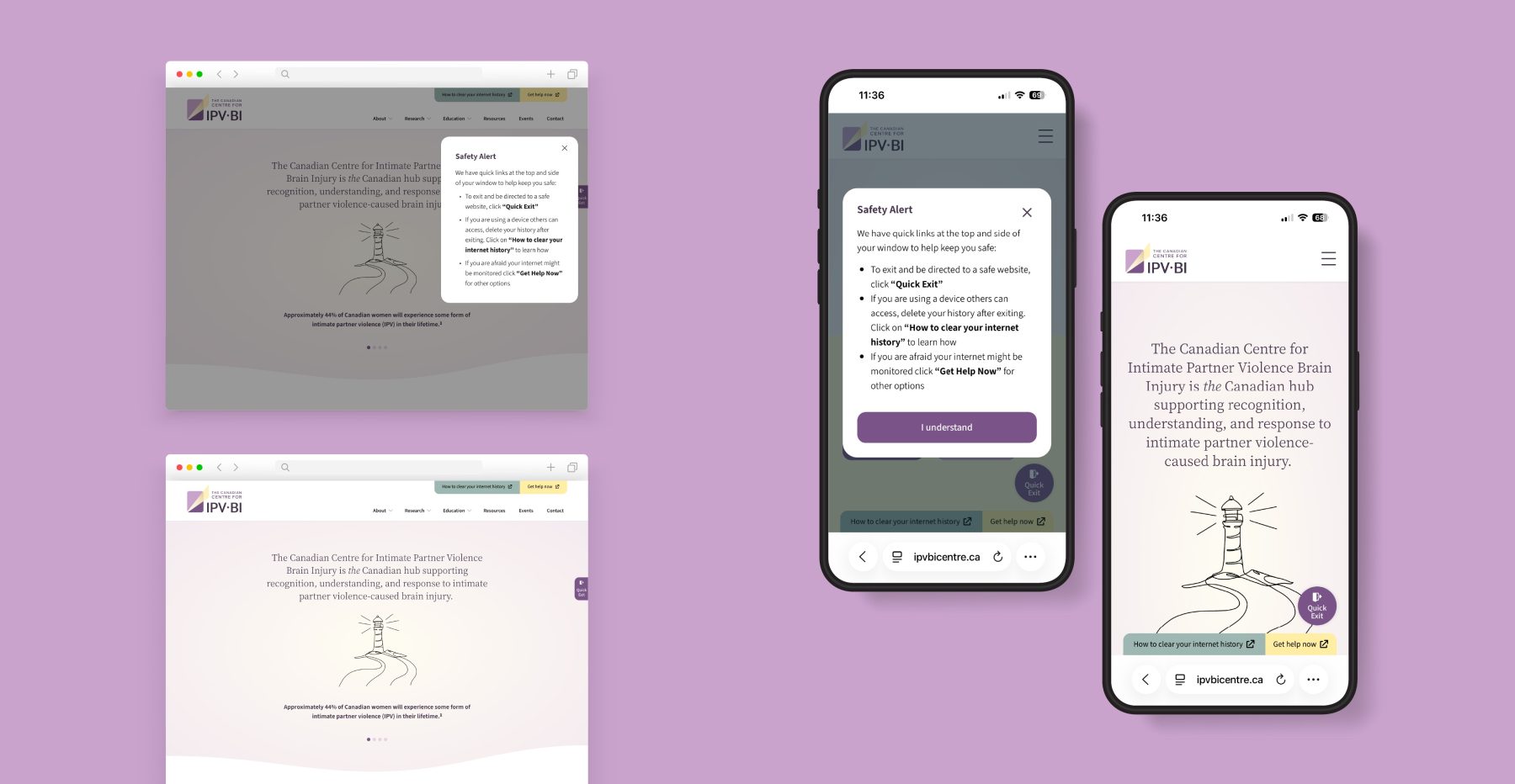
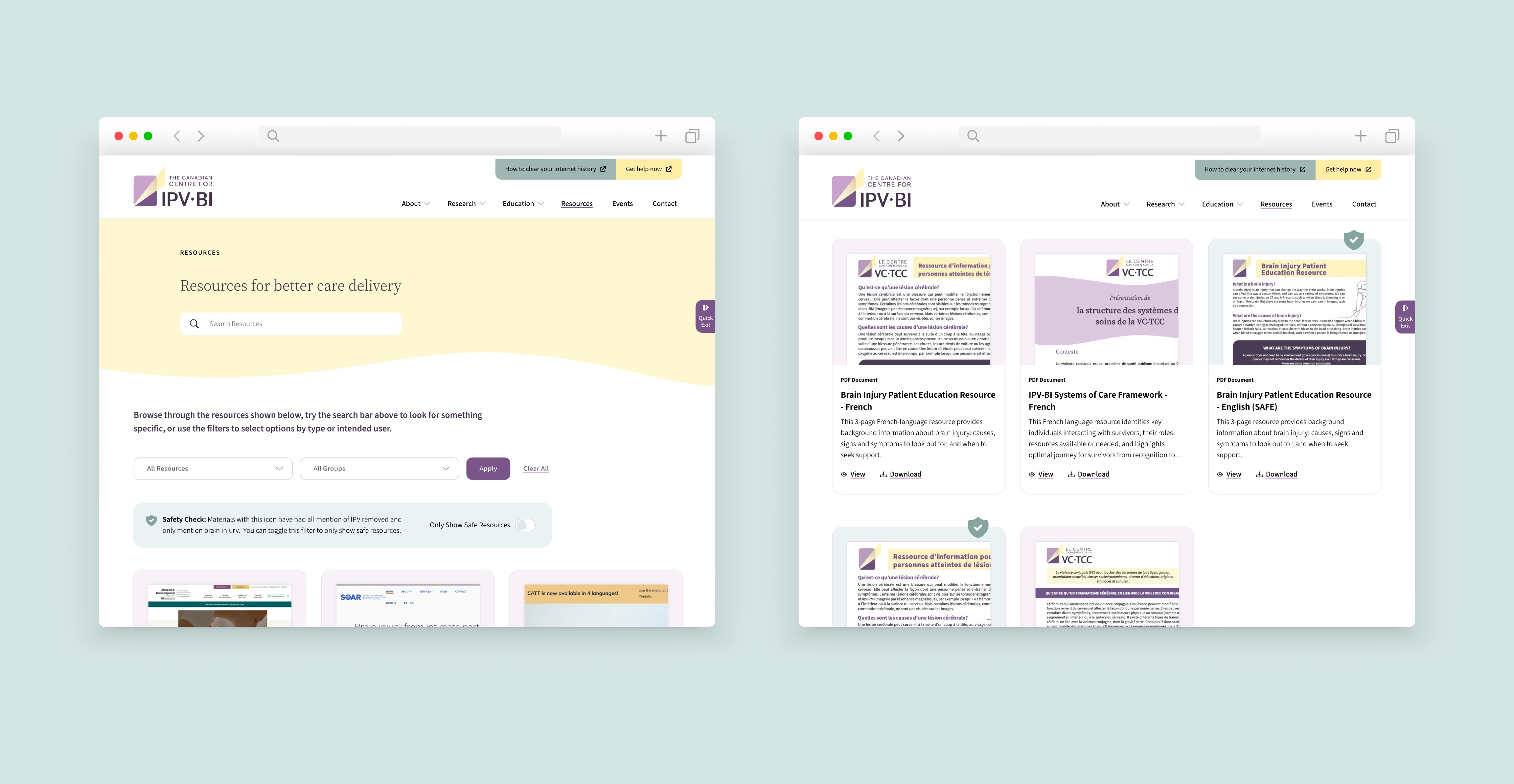
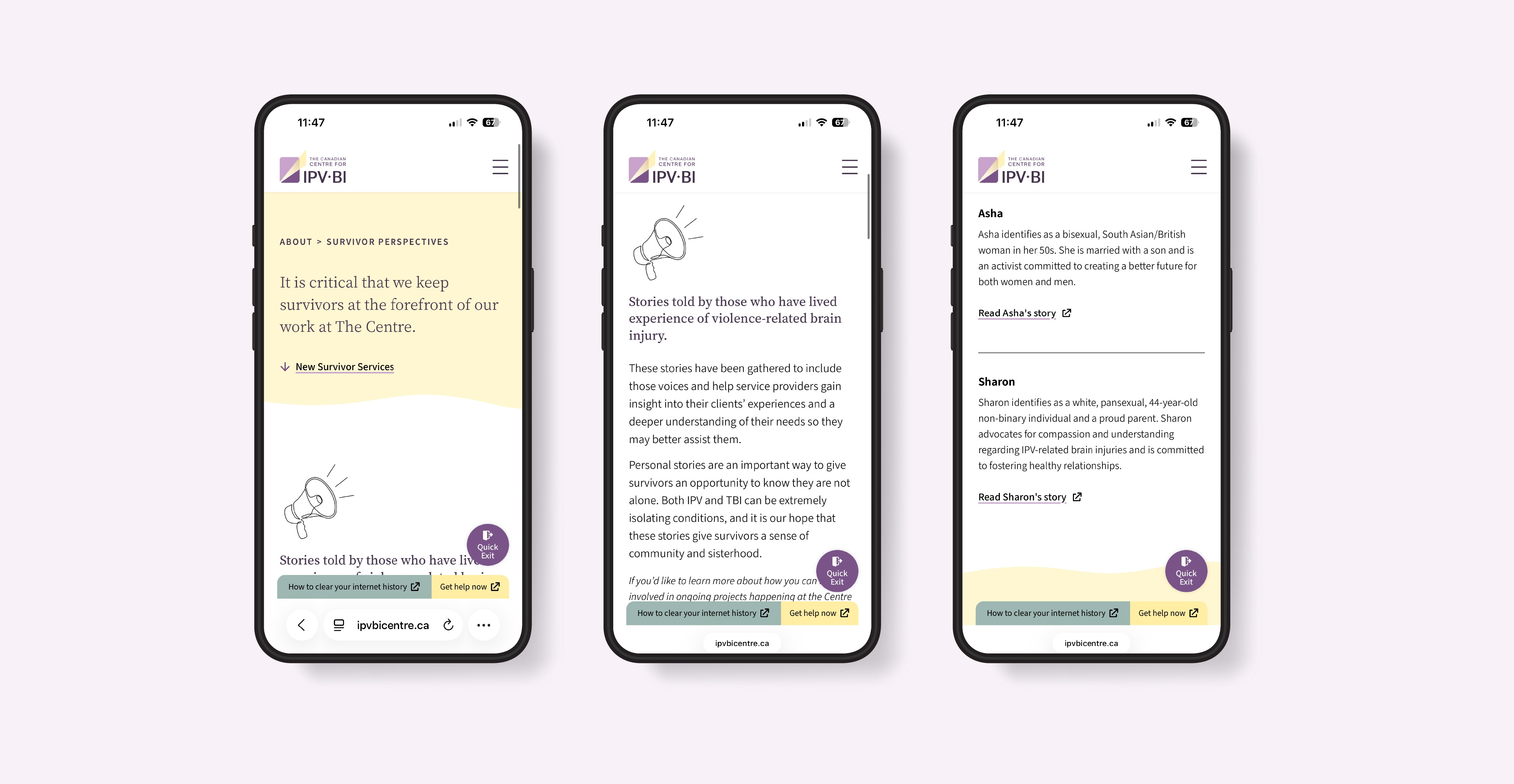
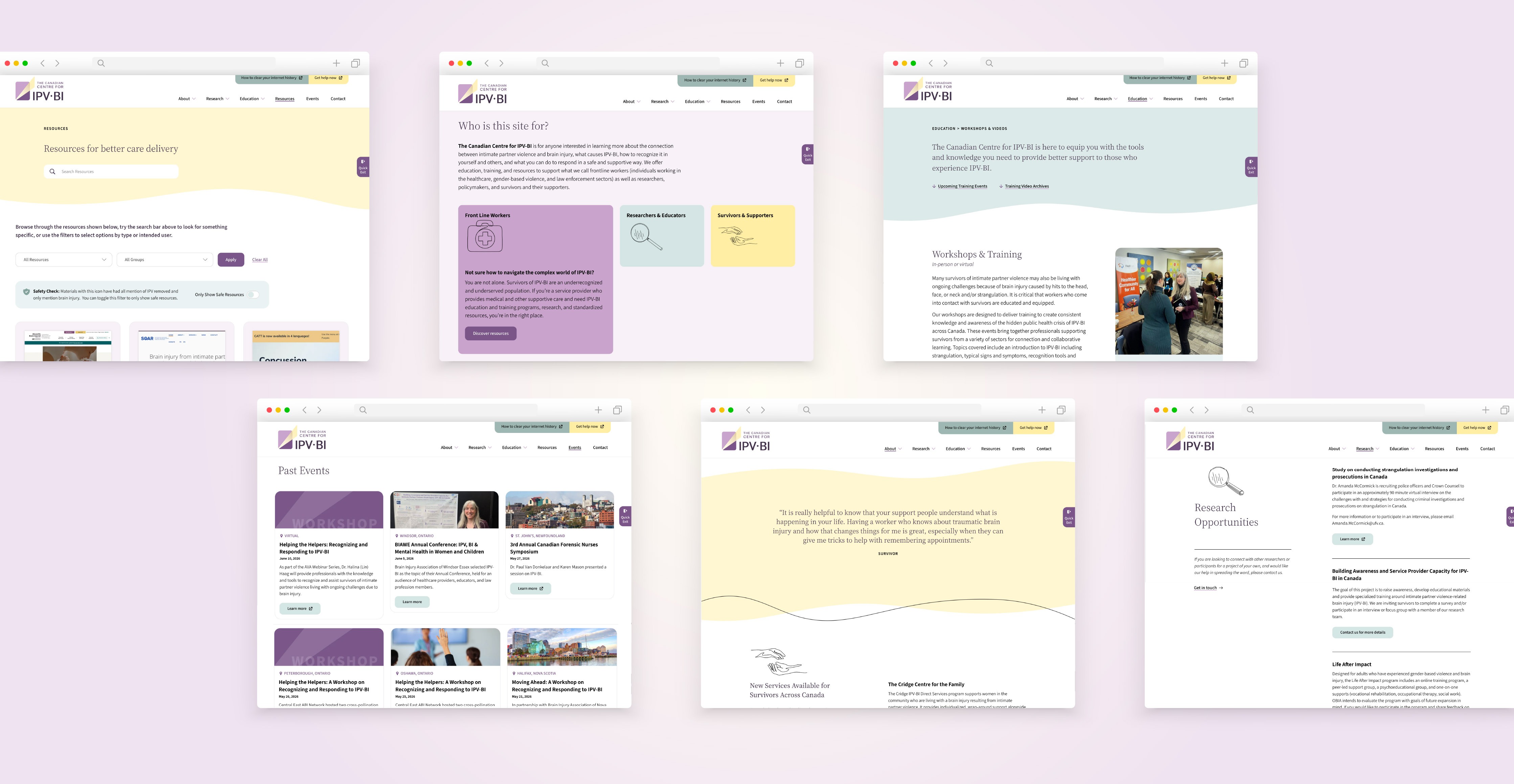
The website is strategically structured to minimize cognitive load through intuitive navigation, generous whitespace, accessible typography, and calming visuals. The site hosts research, resources, educational opportunities, and events—consolidating what was once fragmented across various platforms into one place. The ‘Survivor Perspectives’ page shares real survivor stories, amplifying these voices and ensuring they feel represented. To address the critical need for survivor safety, we integrated features such as a safety alert pop-up, quick-exit button, and a 'Safety Check' resource filter.
Impact
The Centre addresses a critical gap in awareness, education, and support surrounding intimate partner violence and brain injury—an intersection that remains overlooked despite its significant prevalence and impact on survivors. By creating Canada’s first centralized hub for IPV-BI, the The Centre makes knowledge, resources, and community more accessible.
The initiative has generated significant engagement across advocacy networks, expanded opportunities for education and outreach, and strengthened The Centre’s role as a national leader in the field. This widespread community validation underscores the project's success in amplifying the Centre’s mission and driving national engagement around a vital public health intersection.
More Work
View all case studies
How a service design approach revealed new ways to reach Ontario’s most underserved