How a service design approach revealed new ways to reach Ontario’s most underserved
To introduce a series of new screening tests, Prenatal Screening Ontario (PSO) needed to learn how best to reach a diverse set of underserved audiences — providers and pregnant individuals across urban, rural, and remote Ontario.


- Client
- Prenatal Screening Ontario
- Sector
- Gov't & NFP, Health
- Focus
- Website Design, Service Design, Brand Design
PIVOT worked closely with the PSO team to learn about the barriers (both perceived and tangible) to better understand the system of prenatal care delivery. With our Informed Design process, we identified key system barriers and validated and designed opportunities for new ideas through strategic codesign sessions. Our research insights lead to the design of many artifacts aimed at better reaching those who are most underserved in Ontario.
Challenge
PSO was looking to understand how best to communicate the new tests and practice change to healthcare providers and to pregnant individuals in urban, rural, and remote Ontario. PSO, being a relatively new program under the umbrella mandate of the Better Outcomes Registry and Network (BORN) Ontario, was struggling to find its footing to communicate the changes to the various audiences across the system, finding a lack of awareness of PSO and what it offers amongst pregnant individuals, but also healthcare providers.
Therein lay the problem: how to communicate information and practice change to audiences with little to no awareness of who the organization is and what it can offer?
Process
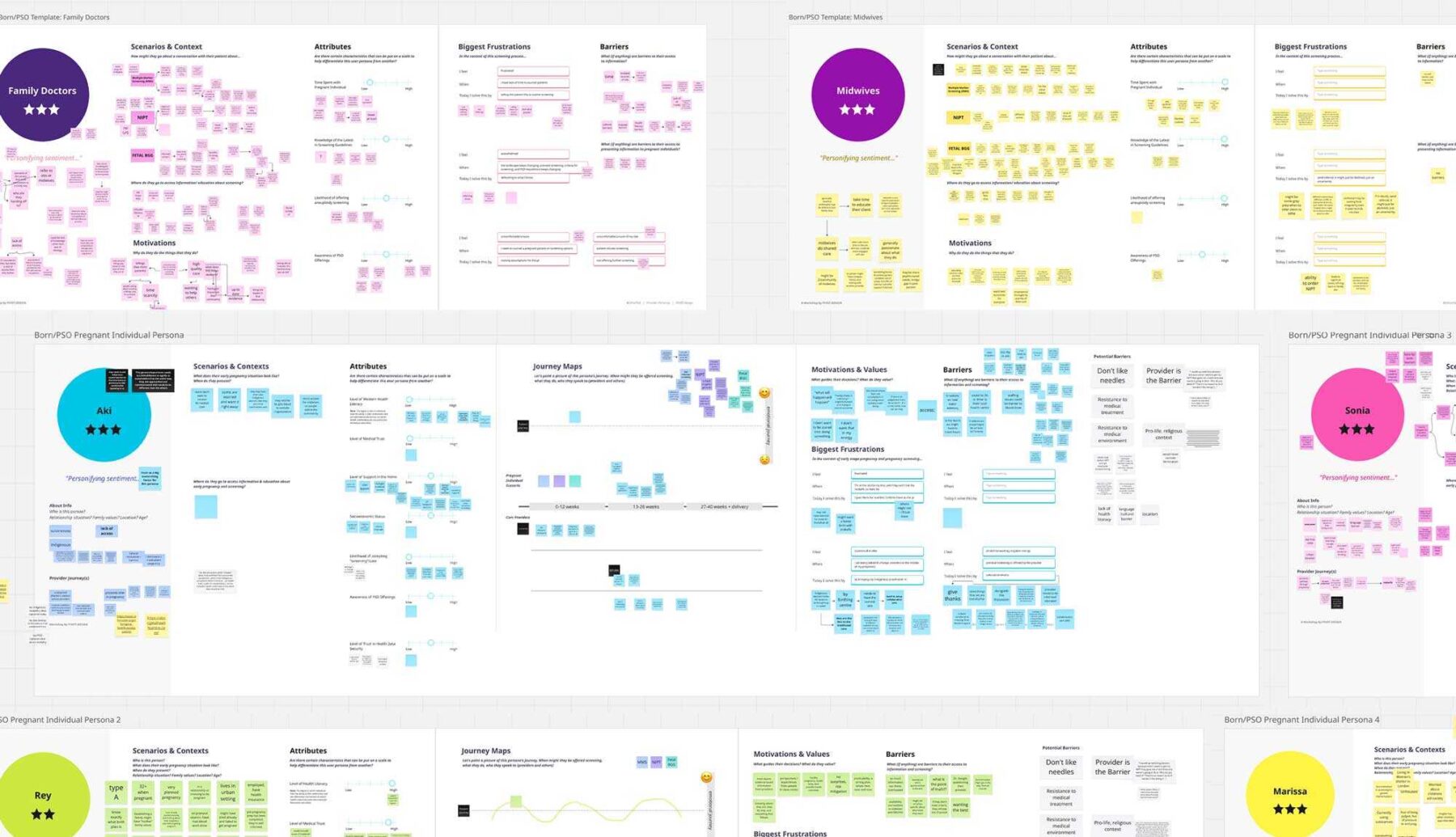
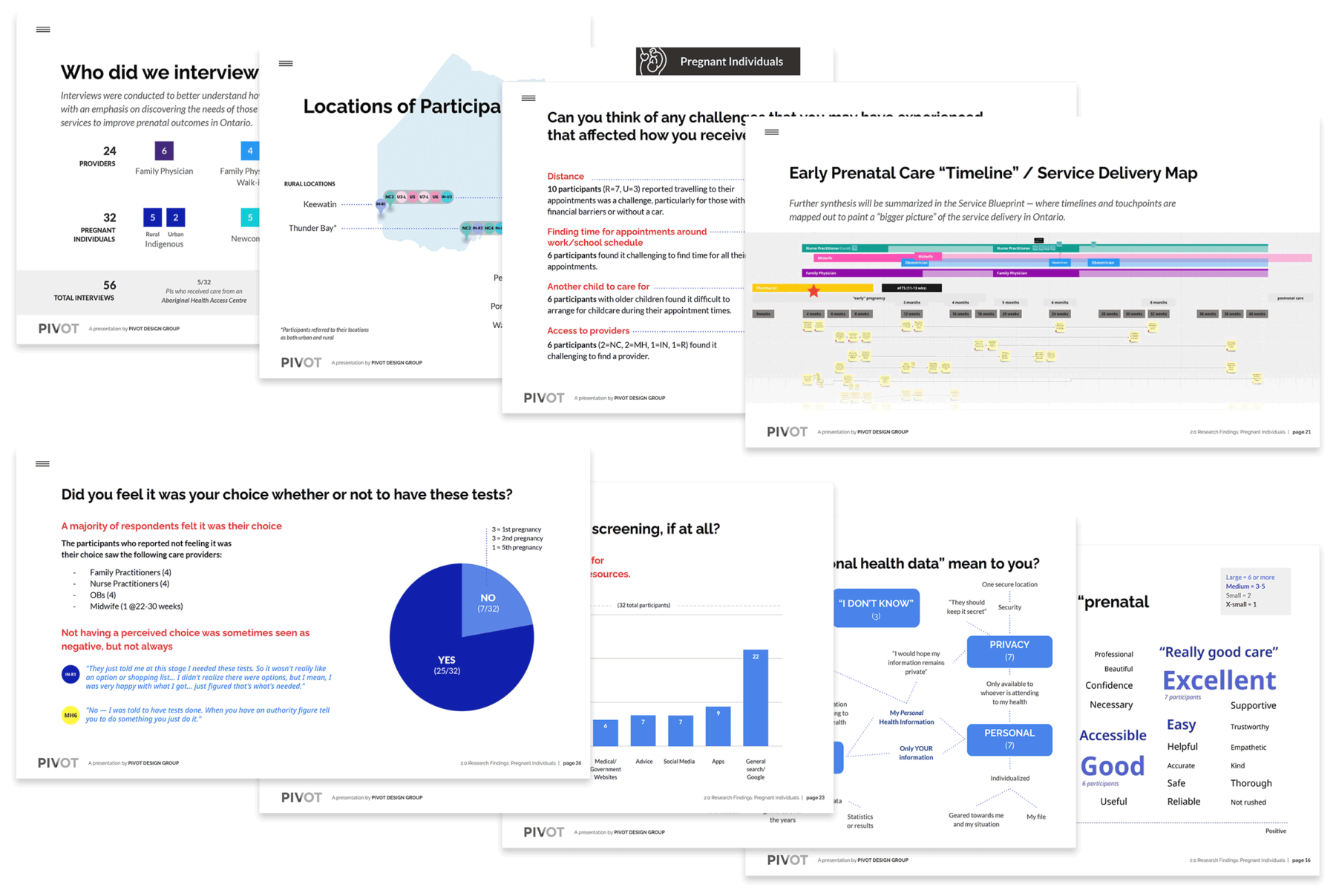
Through early worksessions with the core PSO team, we formulated an outline of “user personas” in the prenatal screening ecosystem. These personas were prioritized based on the project goals. PSO identified that the focus of the research should be on how to best serve those who are most underserved in Ontario. Fifty-six interviews were conducted with pregnant individuals and with providers (obstetricians, midwives, family physicians, and nurse practitioners) across Ontario to validate our understanding of who these people are and what their needs are within the prenatal screening ecosystem.
The interview discussions were focused on how people discussed their prenatal screening options with their providers (if at all) and what other information they were looking for. Interviews with providers were focused on understanding the other side of that consult conversation, as well as on learning what tools and resources are needed by providers when it comes to implementing practice changes. The interview process was an invaluable tool to learn about the rural and remote ecosystem of care delivery and the lack of access to screening services and healthcare in general for many Ontarians.
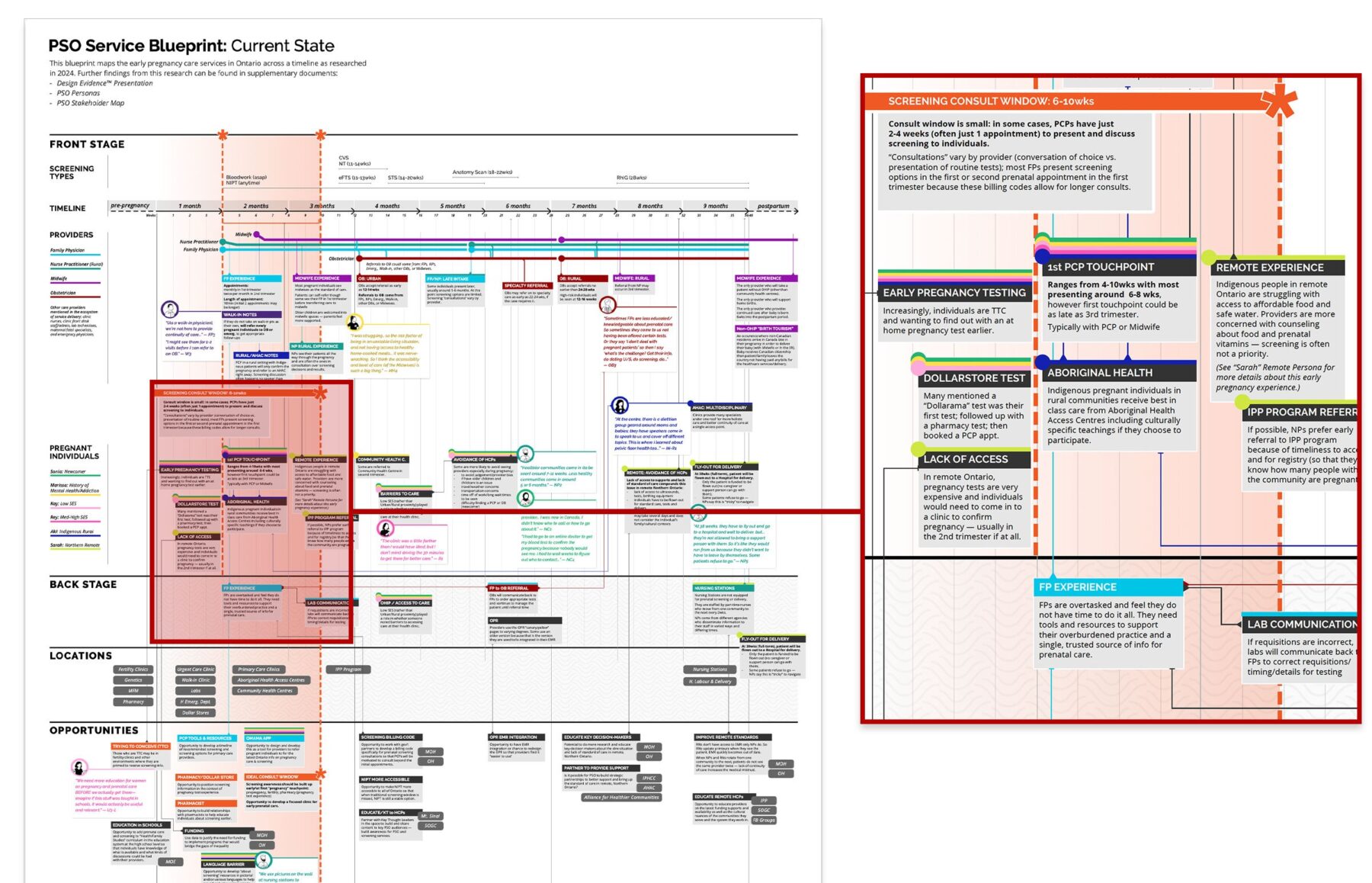
A presentation of key findings and insights as well as a visual timeline (service blueprint) highlighted the core learnings from the interview process. This blueprint outlined key user journeys, specific touchpoints, and sentiments layered over both the patient and provider experiences. In particular, it highlighted several critical points in time, locations, and potential stakeholders that would be important to the delivery of new screening information.
Solution
Our research revealed critical friction points in how prenatal information was accessed and delivered. To address these, we executed a comprehensive design strategy that included a digital-first microsite, streamlined provider resources, and a refreshed brand identity—ensuring a seamless, supportive experience for all stakeholders.
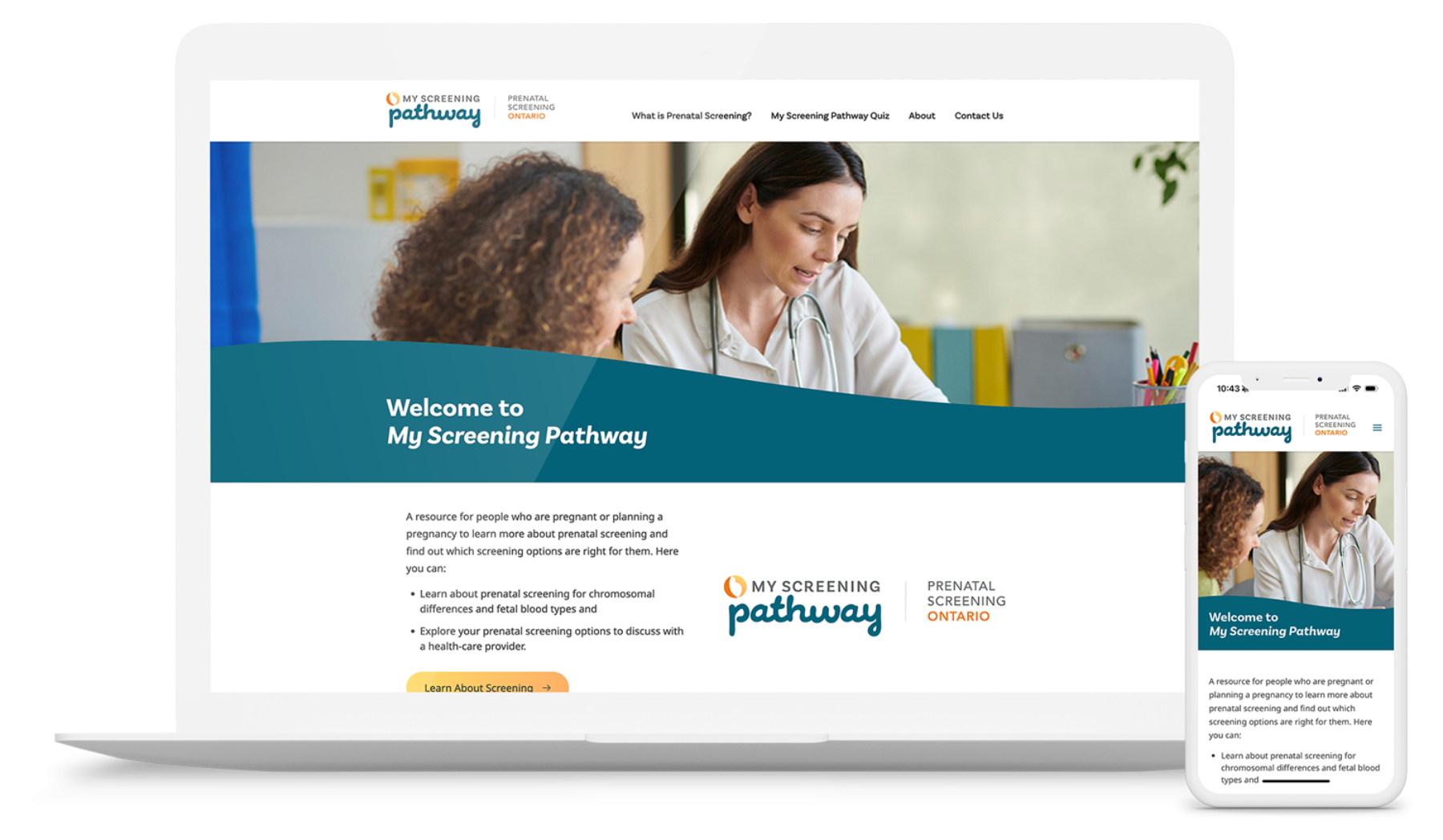
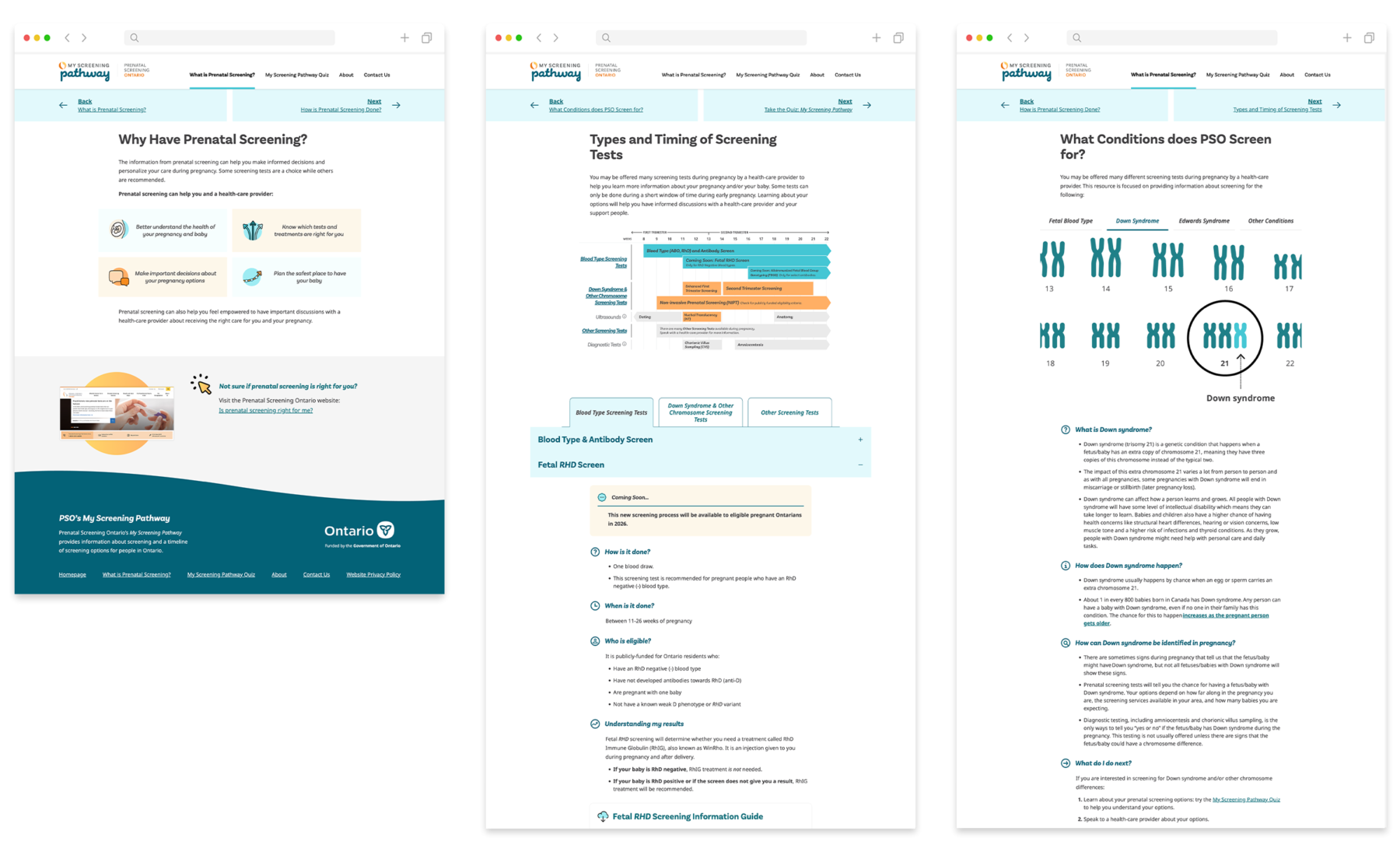
Following one of the key findings from our qualitative research approach, we developed and tested a microsite to fill a gap in the service delivery ecosystem. Titled 'My Screening Pathway,' the site serves as a single source of prenatal information for pregnant individuals, supporting knowledge transfer, information delivery, decision-making, and critical practice change.
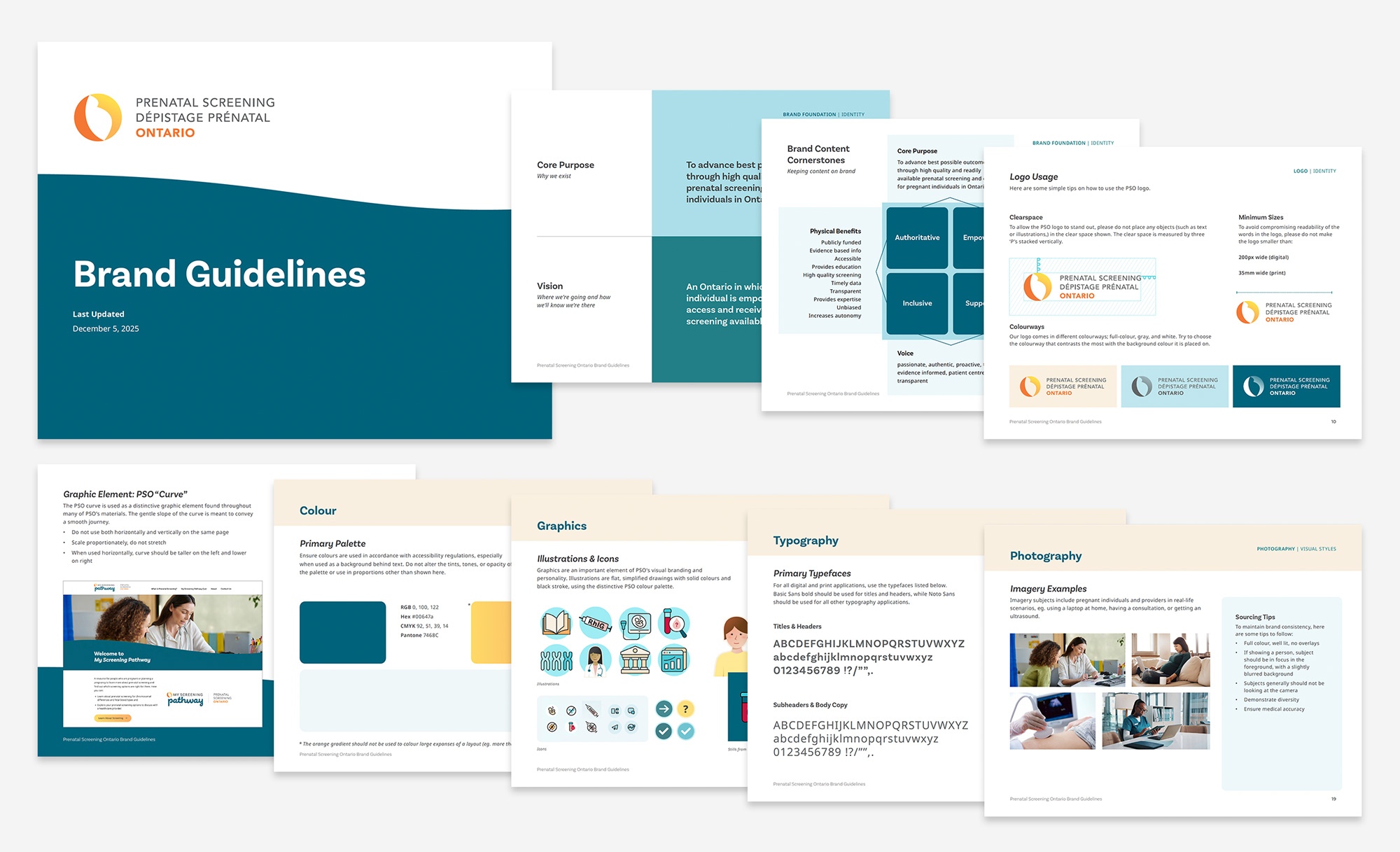
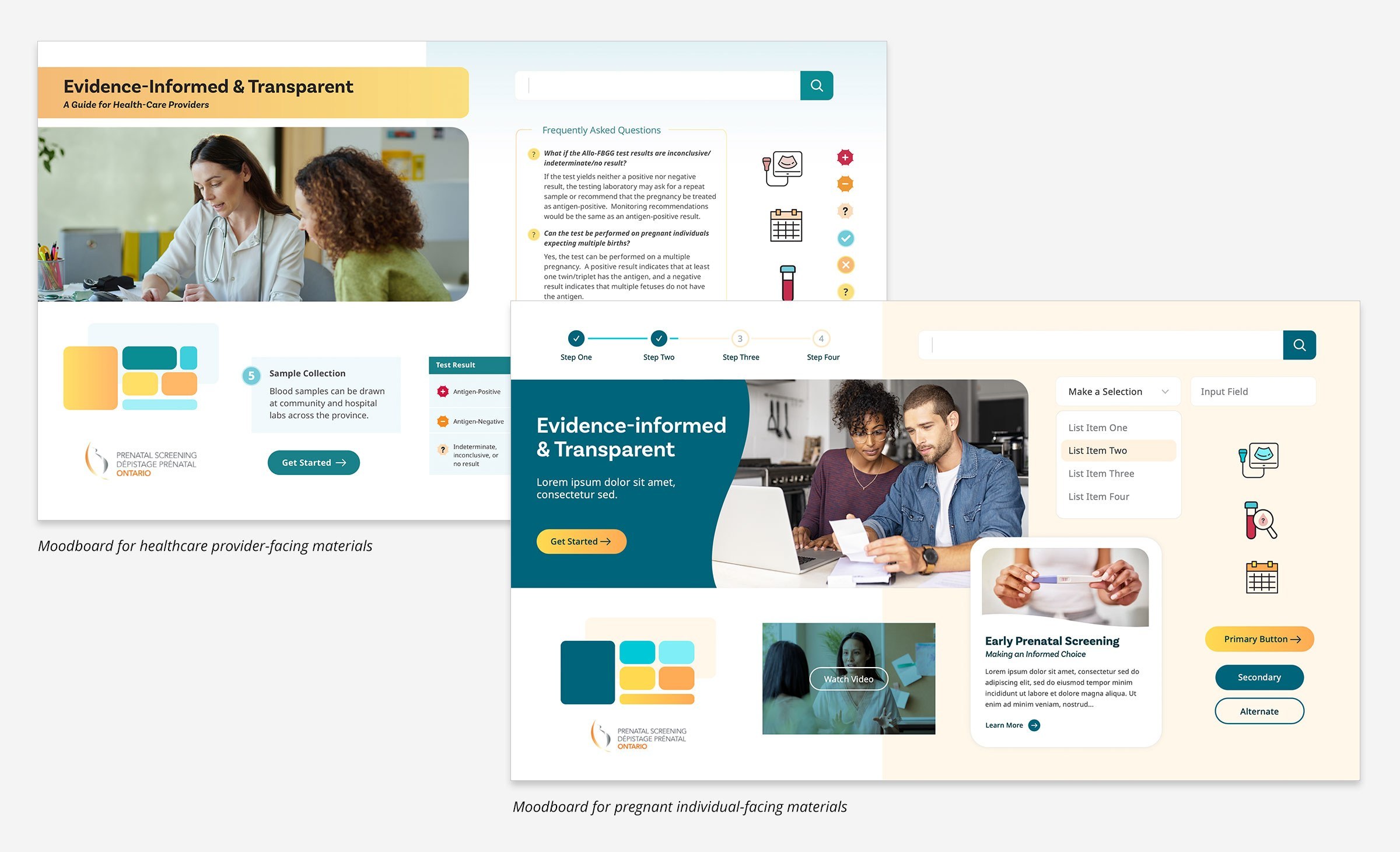
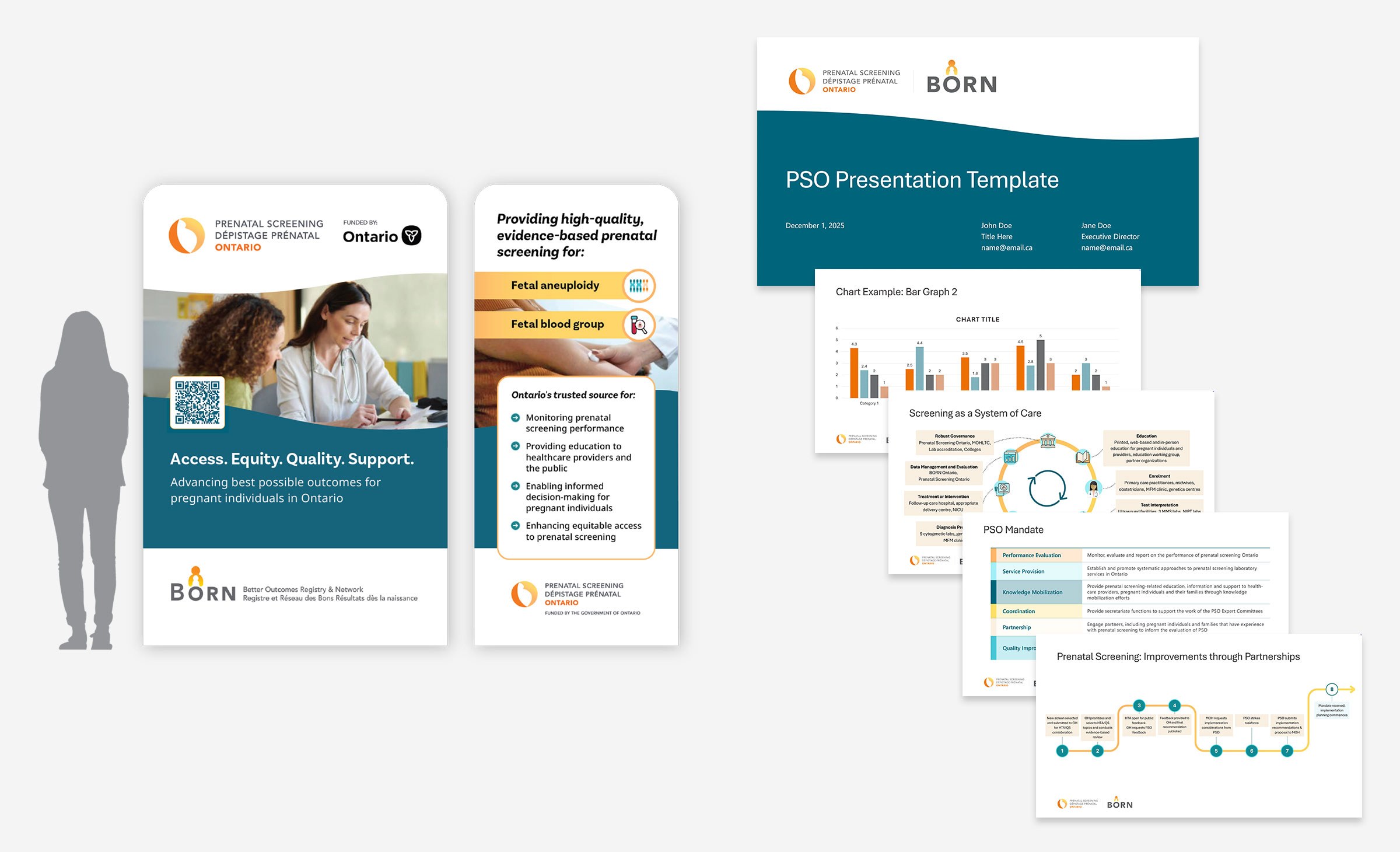
To support the development of materials for both pregnant individuals and healthcare providers, a brand foundation and two distinct moodboards were created to tailor to each audience while still fitting within the overarching BORN/PSO system. This foundational brand work went on to inform a full brand update and rollout that included designing new materials and redesigning existing assets, as well as providing templates for their team to manage internally.
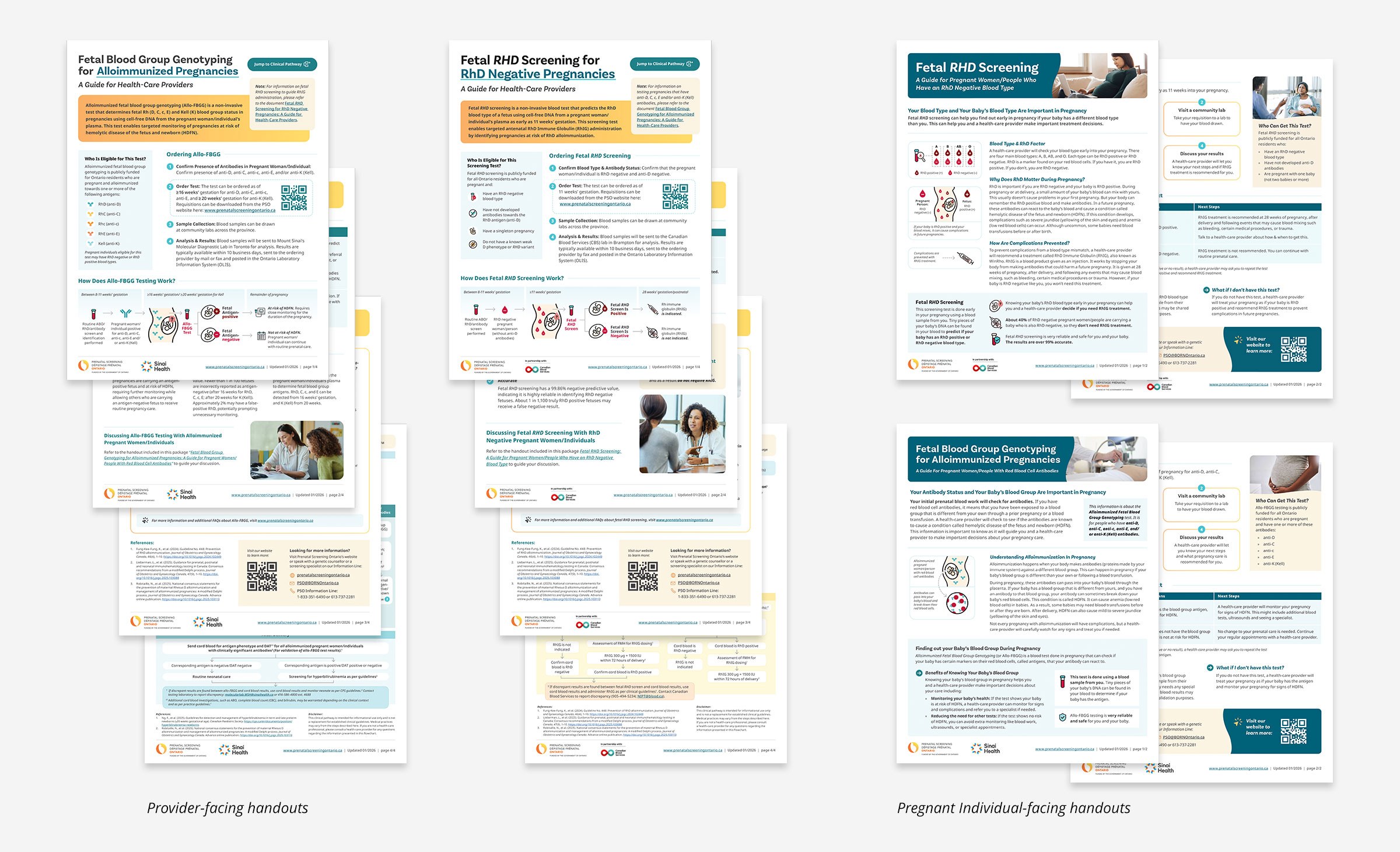
To support PSO’s rollout of new prenatal screening tests, and address our key research findings that providers need a concise, single source of information to help them with practice change and prenatal care, we designed two downloadable informational packages. Each package provides practitioners with the most pertinent pieces of information needed to understand and implement the new test, as well as a handout to provide their patients and guide the pretest-counselling discussion.
To help providers and sonographers find the information they needed on the PSO website, we worked closely with the PSO team to consolidate content on the site and make adjustments to the Information Architecture and hierarchy of the site.
Further, to help develop a brand presence, we embarked upon a 6-month social media campaign to build brand awareness for PSO and screening services offered in Ontario.
Impact
Following our extensive work and learnings with the PSO team and recognizing the value it was bringing to the organization, BORN invited PIVOT to help them better articulate their brand both internally and publicly, and to update their brand identity to improve the quality of their materials and expand their brand presence.
More Work
View all case studies
A new brand and mobile-friendly experience for an asynchronous group therapy platform