Reframing post-heart attack recovery into a patient-centered care pathway
Following a cardiac event, patients and their families are often overwhelmed by complex clinical information and significant lifestyle adjustments. A patient passport was created to help provide clear step-by-step direction for each phase of recovery.


- Client
- Canadian Cardiovascular Society
- Sector
- Health
- Focus
- Print Design
Challenge
The Canadian Cardiovascular Society (CCS) is making the shift from guideline creation to helping to actually change practice. As a landmark first step, Pivot was brought on-board to help develop a direct-to-patient tool that supports timely self-management and empowers active participation in recovery. The primary goal was to create an accessible, bilingual paper-based "patient passport" that structures immediate discharge steps, promotes long-term care plan adherence, and highlights validated online resources.
Process
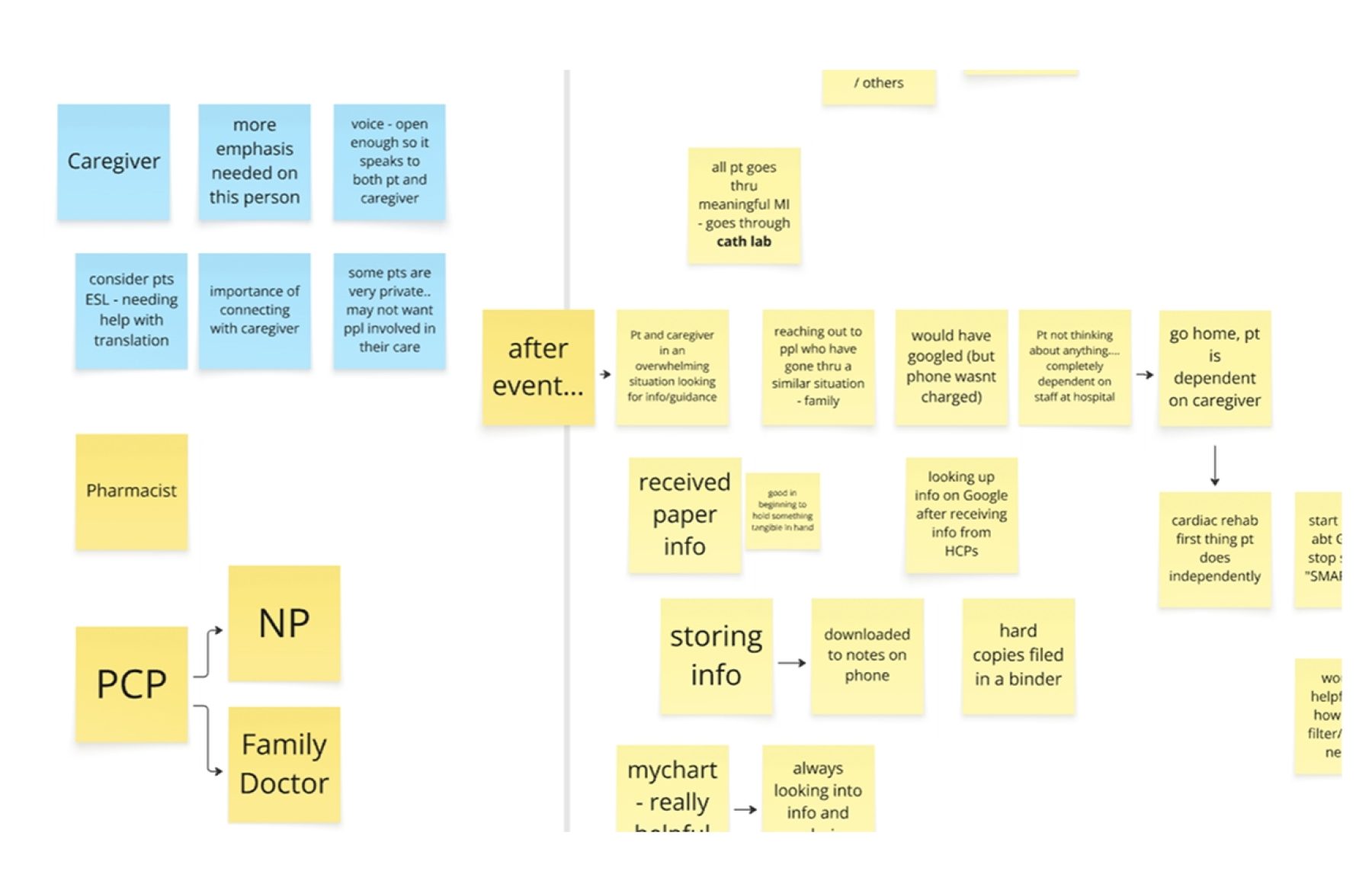
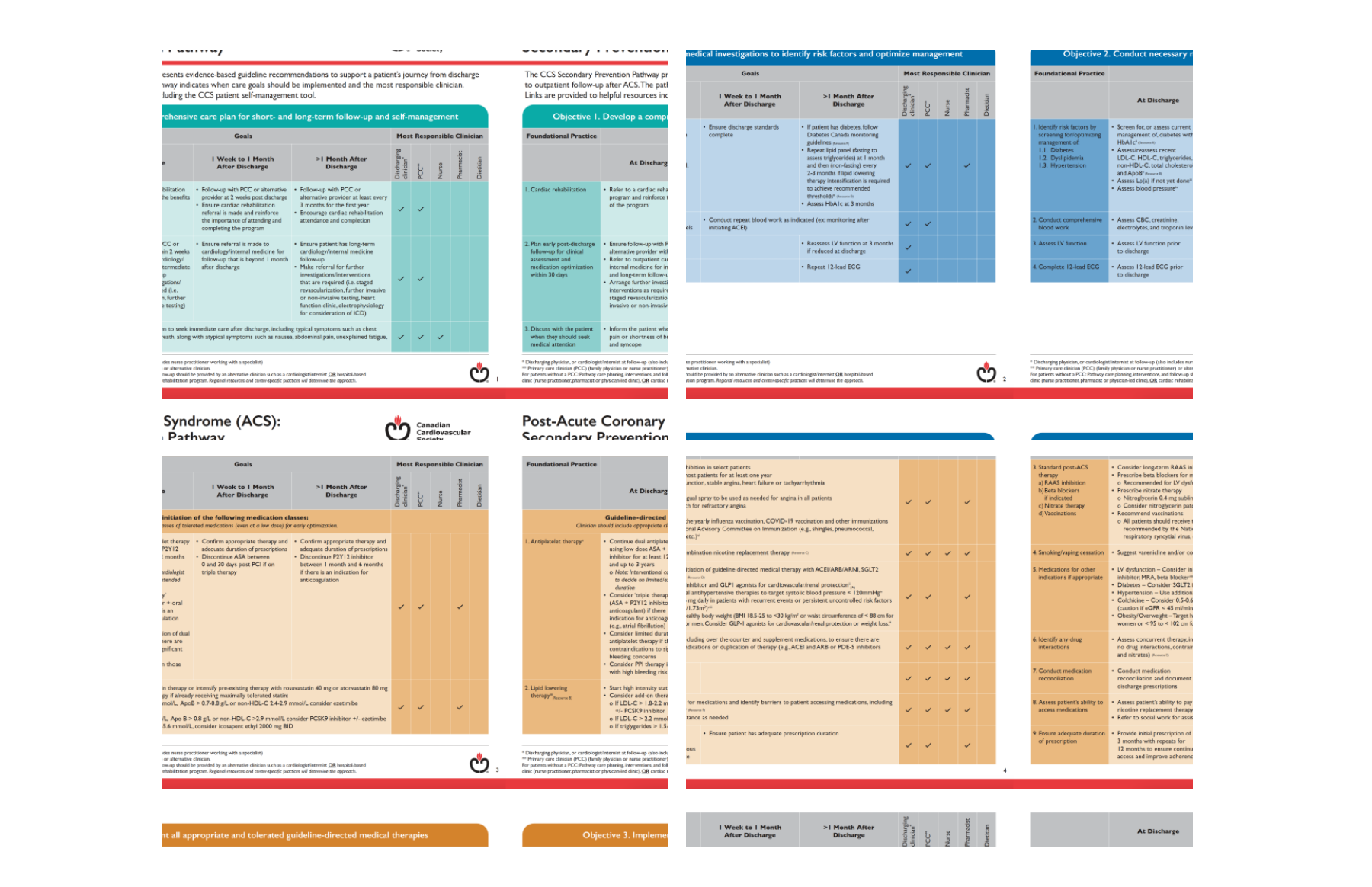
We engaged the core project team — cardiologists, and patient/caregiver representatives to co-design a paper-based "patient passport" across three recovery phases post-heart attack. We held a number of sessions with the working group to frame the information hierarchy of the patient-facing tool, using the provider-facing Post-Acute Coronary Syndrome (ACS) Secondary Prevention Pathway as a starting point. The primary goal was to structure complex clinical information into digestible, plain-language sections.
Solution
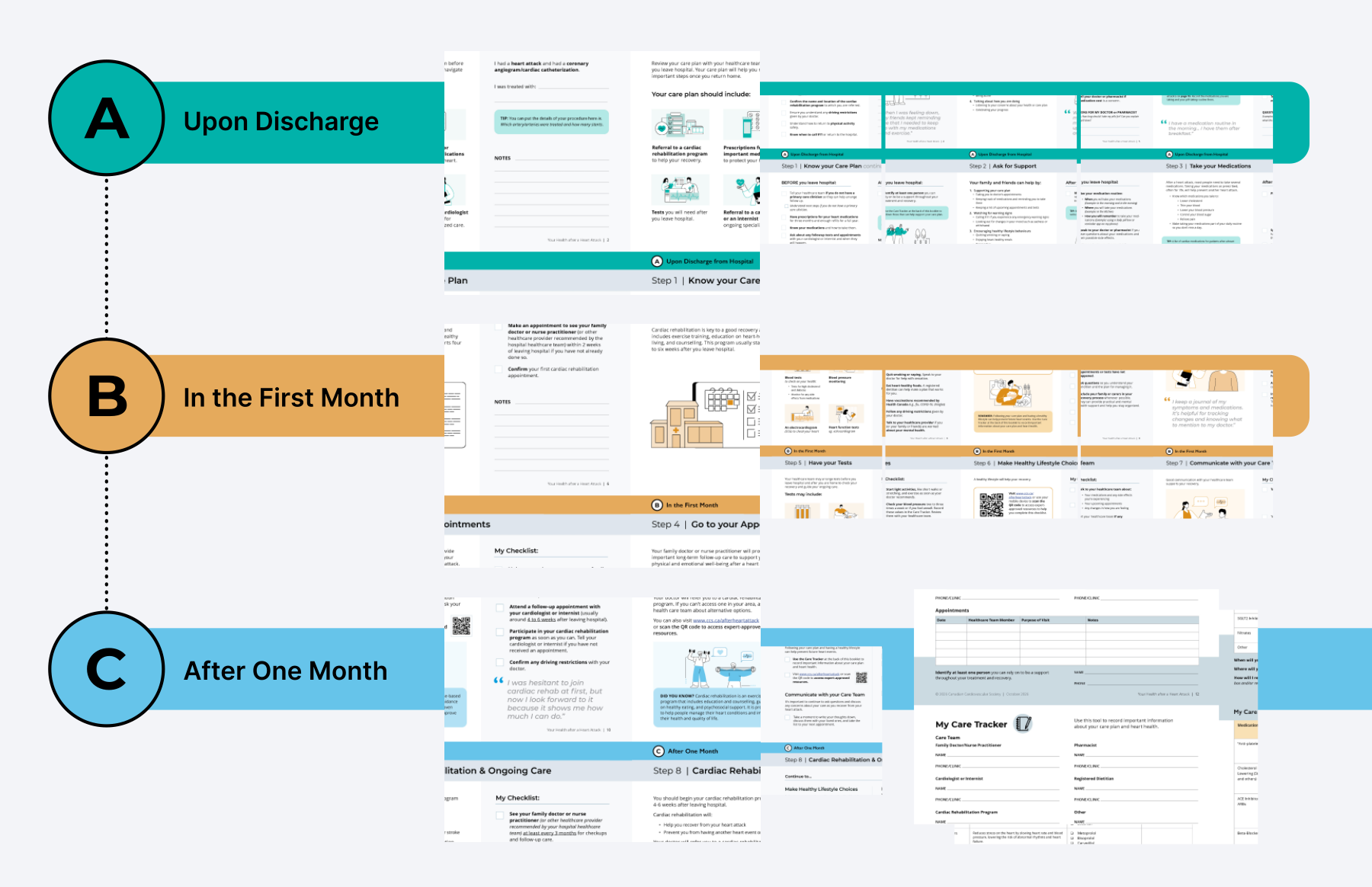
We organized critical health actions into three intuitive, time-based phases—Upon Discharge, In the First Month, and After One Month—to avoid information overload during early recovery.
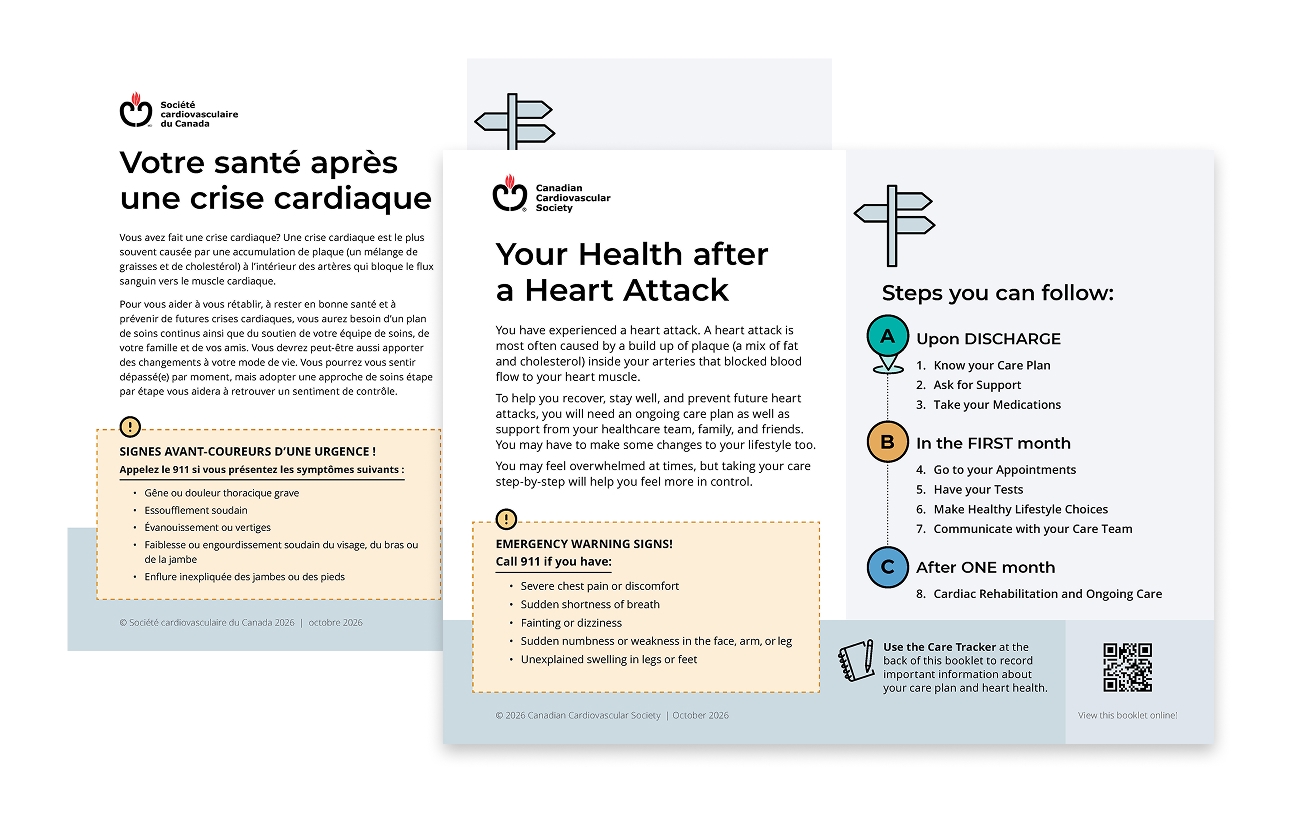
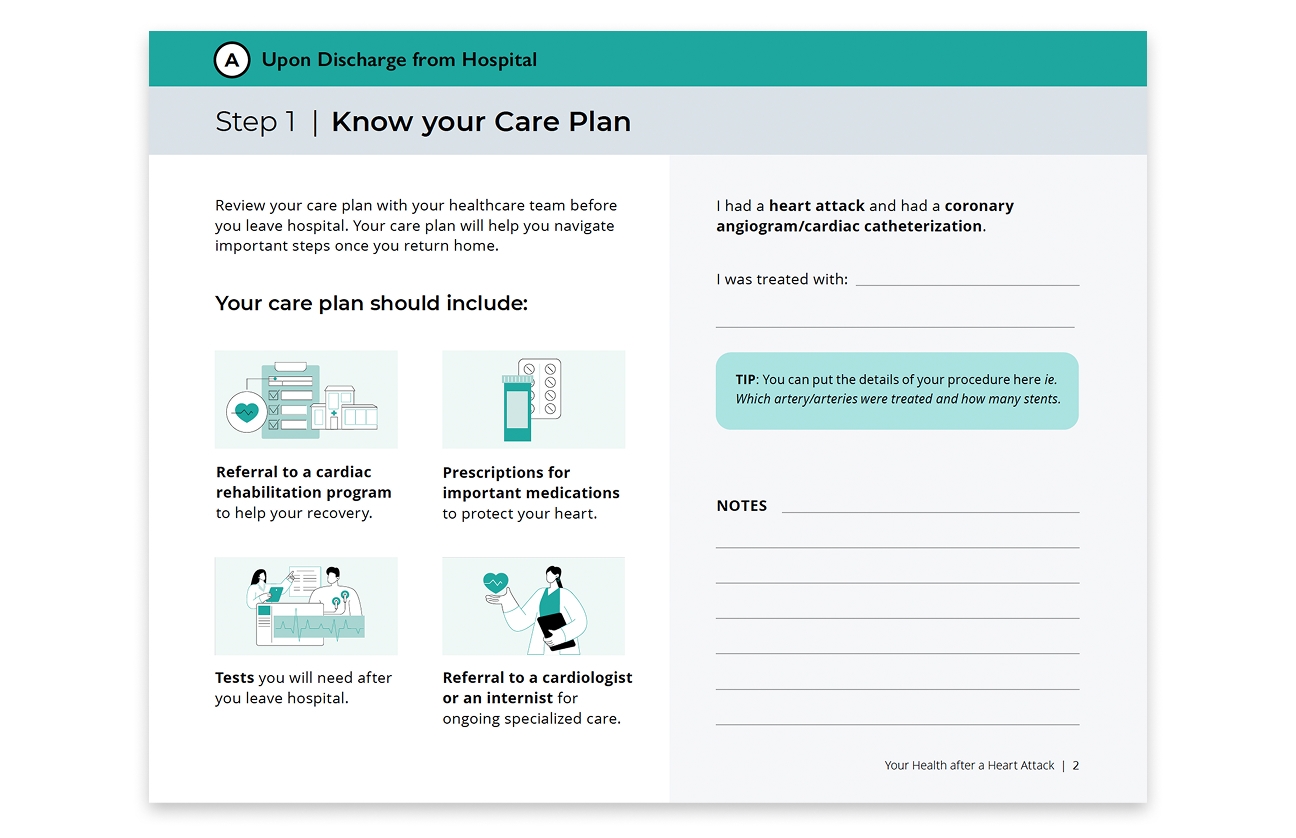
A print-ready, accessible booklet was developed, featuring:
- Emergency warning signs and clear, phased recovery steps
- Detailed medication guides covering drug types, functions, and adherence planning
- Interactive logs for tracking care teams, appointment dates, blood pressure, and cholesterol/blood sugar levels
- Goal-setting worksheets tailored for short- and long-term lifestyle changes
- Embedded QR codes providing immediate access to expert-approved digital resources on the CCS website
More Work
View all case studies
A clinical intervention to promote behaviour change in those with cardiovascular disease